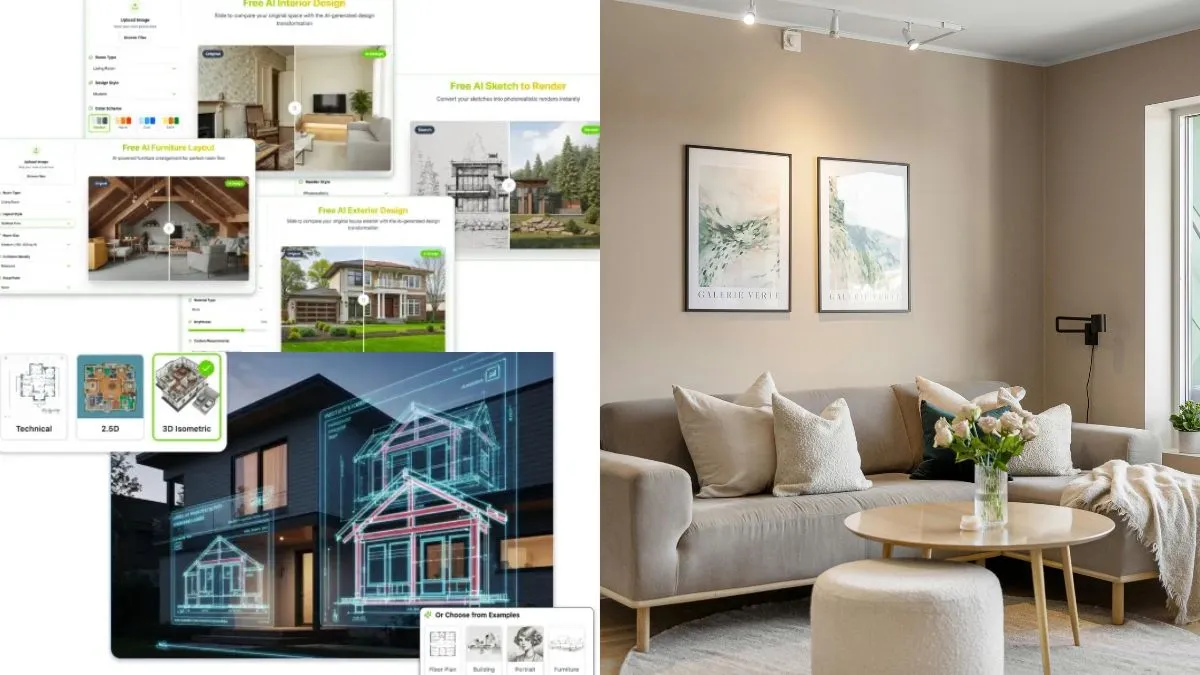
Discover how AI home design tools help homeowners visualize renovations, redesign interiors, and enhance curb appeal before spending a single dollar.
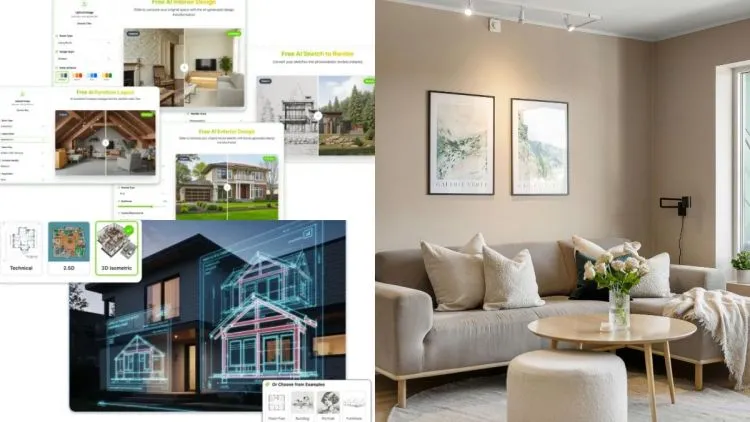

For generations, remodeling a house or planning a home design project from scratch followed a predictable, often stressful path. Homeowners spent weeks flipping through glossy magazines, scrolling endlessly through social media feeds, and trying to sketch out abstract ideas on paper. Translating a vision from the mind’s eye into a physical reality required a mix of guesswork, spatial intuition, and substantial financial risk. If a chosen paint color or structural layout didn’t work out, fixing it after construction began was incredibly costly.
Today, a massive technological shift is changing the way we approach our living spaces. Artificial intelligence has stepped out of the research lab and into our living rooms, bedrooms, and backyards. Modern AI-driven design platforms are democratizing the architectural world, giving everyday homeowners, renters, and real estate professionals access to instant, photorealistic visualizations. Whether you are looking to revitalize a cramped apartment or entirely reimagine your property’s curb appeal, intelligent software bridges the gap between imagination and reality.
The Democratization of Interior Design
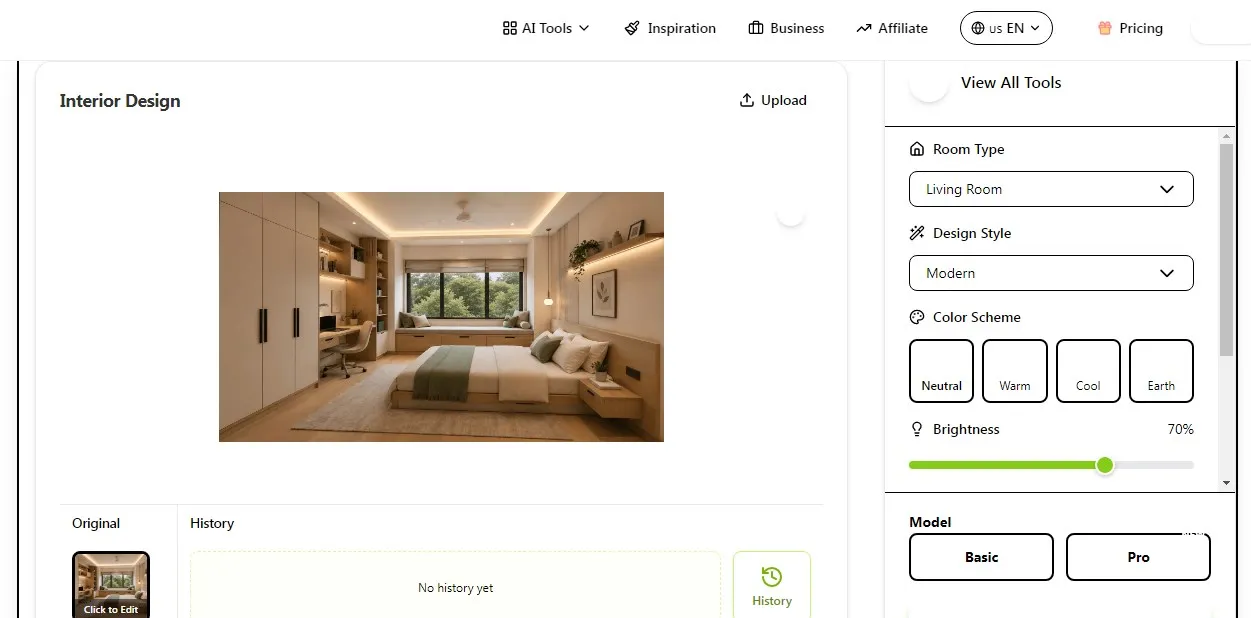
Photo by dehome.ai
The traditional design process often carried an air of exclusivity. Hiring an interior architect or a professional designer required a budget that many everyday homeowners simply couldn’t allocate. Consequently, many individuals settled for guesswork, buying furniture and decor hoping they would fit the room’s scale and aesthetic.
AI has completely upended this dynamic. By utilizing advanced neural networks trained on millions of architectural images, modern design tools allow users to generate tailored, breathtaking concepts in seconds. Anyone looking for the best ai home design free options can now access sophisticated software that analyzes spatial dimensions, lighting, and architectural styles with incredible precision.
These tools work with surprising simplicity. A user uploads a snapshot of a messy, outdated, or completely empty room. Within moments, the AI identifies the structural boundaries—like windows, doors, and columns—and overlays a completely fresh style, whether it is Japandi, mid-century modern, industrial, or minimalist. It provides a risk-free environment to test bold ideas, like swapping beige walls for dark charcoal moody tones or replacing a traditional sofa with a sleek, modular sectional.
Transforming Curb Appeal: The Power of Exterior Visualization
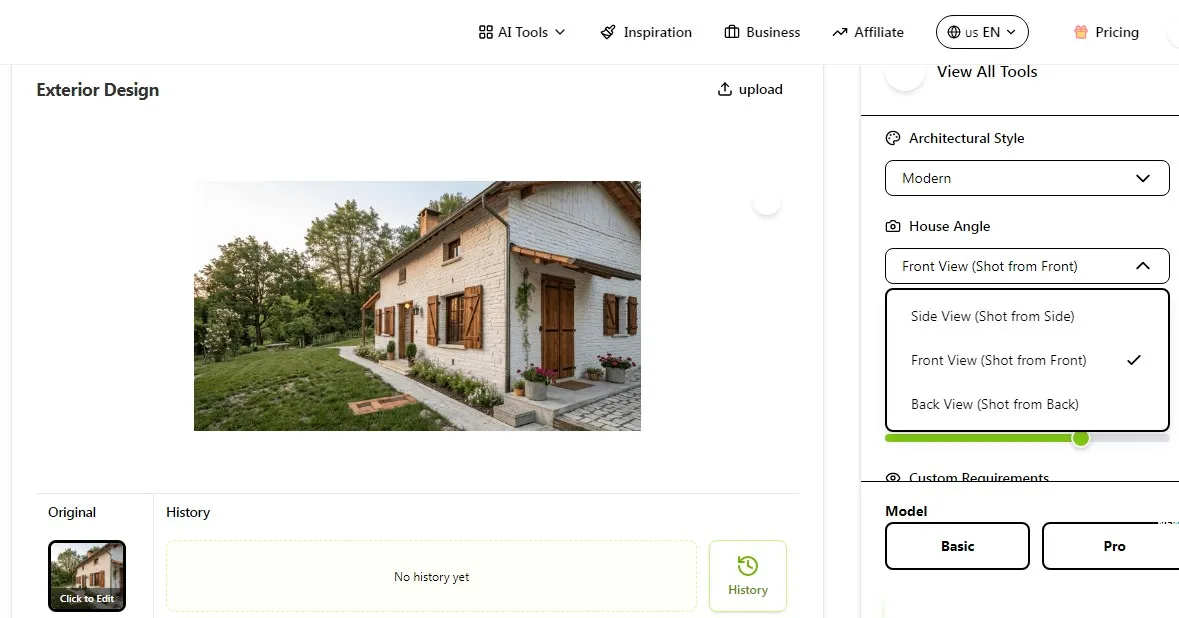
Photo by dehome.ai
While interior spaces dictate how we feel inside our sanctuaries, the exterior of a home establishes the first impression for visitors, neighbors, and potential buyers. Historically, visualizing major changes to a building’s facade was even more difficult than redesigning an interior room. Modifying roofing materials, changing siding, or adding modern architectural elements required complex 3D rendering software that took days to learn and hours to compute.
This is where specialized platforms like Dehome provide a massive advantage. If you want to elevate your home’s facade, focusing on home exterior design through an AI lens removes all the friction. The technology can instantly analyze a photo of an existing property and apply completely new materials and architectural styles.
Imagine seeing your traditional brick ranch house instantly transformed into a crisp, white modern farmhouse with black window trims, or a boxy mid-century exterior updated with warm cedar wood siding and contemporary lighting fixtures. Beyond the building itself, these smart algorithms can suggest complementary landscaping, driveway materials, and entryway layouts, creating a cohesive look that maximizes curb appeal and boosts property value.
The Underlying Technology: How Does It Work?
The magic behind these transformations relies on sophisticated computer vision and generative models. When you upload an image to an AI home design platform, the software doesn’t just apply a generic filter over your photo. Instead, it goes through a complex, multi-layered interpretation process:
- Semantic Segmentation: The AI breaks down the image into recognizable components. It identifies what is a floor, what is a wall, where the ceiling ends, and where natural light enters through a window.
- Depth Estimation: Even with a flat 2D photograph, the algorithm calculates depth and spatial relationships, ensuring that newly generated furniture pieces or architectural structures match the correct scale and perspective of the room.
- Style Inpainting: Based on the user’s selected aesthetic preference, the system intelligently fills in the canvas. It replaces outdated items with trendy alternatives while respecting the natural shadows, reflections, and ambient light of the original space.
Because these steps happen in a matter of seconds, the entire experience feels intuitive and conversational. It allows for rapid iteration, which is the cornerstone of any great creative process.
Bridging the Gap for Real Estate and Professionals
The benefits of AI home design reach far beyond DIY homeowners. The real estate market, historically heavily reliant on physical home staging, is undergoing a digital revolution. Traditional staging involves renting expensive furniture, hiring movers, and spending thousands of dollars to make an empty house feel welcoming to prospective buyers.
With platforms like Dehome, real estate agents can virtually stage properties at a fraction of the time and cost. An empty, cold listing can be populated with high-end, contemporary decor that appeals to modern buyers. Even distressed properties can be showcased with an optimized home exterior design, allowing buyers to see the hidden potential of a “fixer-upper” without needing to use their imagination.
Similarly, contractors and builders use these instant visualizations to align with their clients before breaking ground or buying raw materials. Showing a client a realistic image of their finished kitchen or updated exterior prevents miscommunication and ensures that everyone is on the same page from day one.
Embracing the New Era of Spatial Creativity
The home is our ultimate canvas for self-expression. It affects our mood, productivity, and general well-being. Technology has finally advanced to a point where the tools to optimize these spaces are open to everyone, regardless of artistic background or budget constraints.
By using the best ai home design free tools available online, the intimidation factor of interior and exterior remodeling completely vanishes. You no longer have to wonder if a specific design choice will look good or fit your lifestyle. You can see it, tweak it, and perfect it before spending a single dollar in the real world. As artificial intelligence continues to mature, the bond between human creativity and software precision will only grow stronger, turning the dream of a beautifully customized home into an accessible reality for everyone.
Penulis
Senior content writer – Wordsmith with 10 years experience. I do write everything; lifestyle, technology, finance, economic, entertainment, business, viral things, etc.
Editor
Senior content writer – Wordsmith with 10 years experience. I do write everything; lifestyle, technology, finance, economic, entertainment, business, viral things, etc.
Artikel Bermanfaat dan Menghibur Lainnya
Tim Dalam Artikel Ini