


How indie creators use Nano Banana Pro AI to reduce generation errors, improve prompt accuracy, and build faster creative pipelines.
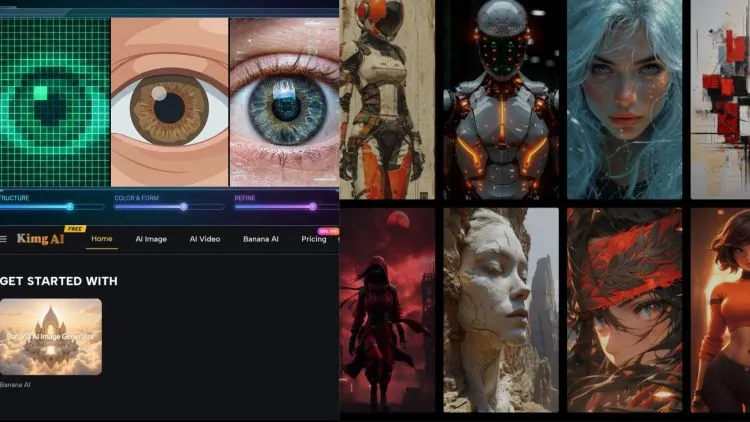

For the independent creator, the most expensive resource isn’t the monthly subscription fee or the cost per credit; it is the time lost to the “generation tax.” This tax is paid every time a model produces a mangled hand, a nonsensical spatial relationship, or a visual style that deviates from the established brand guide. While entry-level models have lowered the barrier to entry for generative media, the friction of “re-rolling” prompts remains a significant bottleneck for those attempting to build repeatable asset pipelines.
Evaluating a pro-level model like Nano Banana Pro isn’t merely about chasing higher resolution or more vibrant colors. It is a strategic assessment of whether a tool can reliably translate a specific creative intent into a usable asset on the first or second attempt. For indie makers, the goal is to shift from a workflow of “prompting and praying” to one of “prompting and producing.”
The Generation Tax and the Indie Creator’s Dilemma

Creator dilemma-canva
When we look at the pricing tiers of modern AI platforms, the tendency is to calculate the cost per image. However, a “cheap” generation that requires twelve iterations to get the composition right is effectively twelve times more expensive than a premium generation that hits the mark immediately. This hidden cost includes not only the consumed credits but the cognitive load and the time diverted from higher-level tasks like editing, sequencing, or marketing.
The evaluation of a pipeline built around Nano Banana Pro AI should begin with a “time-to-usable-asset” metric. In a production environment, an asset is only “usable” if it meets strict criteria for anatomical correctness, lighting consistency, and prompt adherence. If a creator is spending more time fixing AI artifacts in Photoshop than they are generating new concepts, the model has failed its primary professional function.
Indie creators must also weigh the value of prompt adherence versus raw aesthetic appeal. Many models are trained to produce “beautiful” images by default, often ignoring the nuances of a prompt in favor of a generic, high-contrast look. A professional evaluation requires testing the model against complex, non-generic descriptions to see if it respects the hierarchy of instructions or simply defaults to its most common training patterns.
Structural Coherence: Why Nano Banana Pro AI Targets the Mid-Range
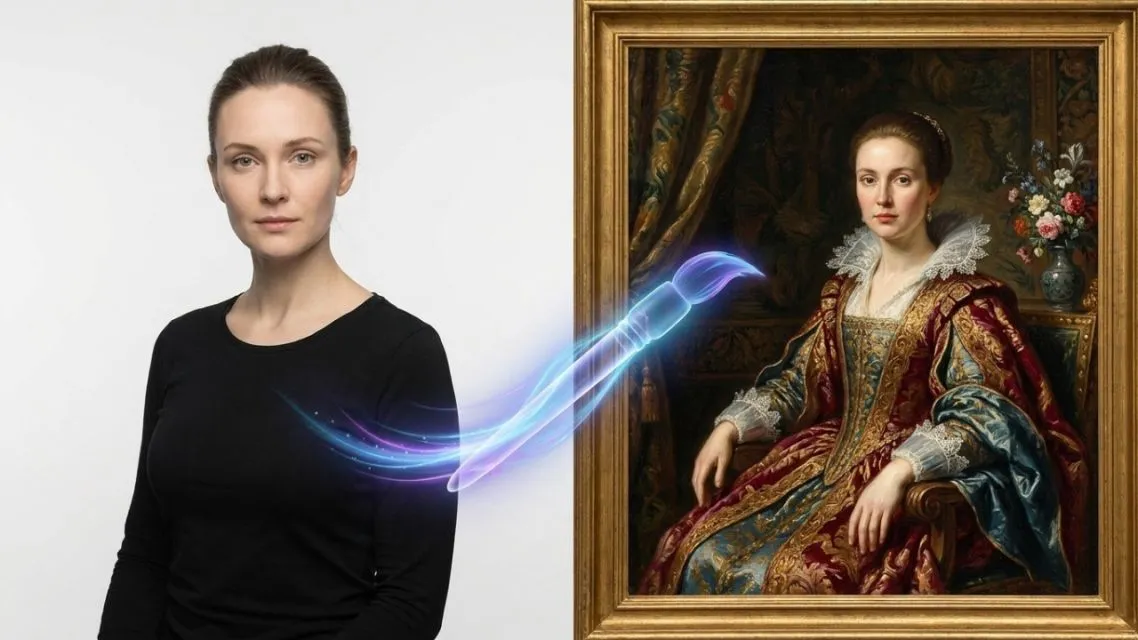
AI image before after-kimg AI via Kimg.ai
A common failure point in generative workflows is spatial logic. Standard models frequently struggle when asked to place objects in specific relationships—such as “a cup to the left of a laptop, but behind a notebook.” These spatial failures are what lead to the aforementioned generation tax. Nano Banana Pro AI is designed to mitigate these errors by prioritizing structural coherence.
This coherence becomes vital when moving from static images to video. If a base image has structural flaws—invisible limbs, floating objects, or distorted perspective—those flaws are amplified when the image is fed into a video generator. An indie creator using a “pro” model is often buying insurance against these downstream failures. By ensuring the initial asset is architecturally sound, the subsequent animation or upscaling process becomes significantly more predictable.
It is worth noting that while high-resolution upscaling (the “K-level” resolution often cited in marketing) is a desirable feature, it should be treated as a final production step rather than a core generation requirement. The value of Nano Banana Pro lies in its ability to maintain detail at the base level before the upscale even occurs. If the underlying geometry is broken, no amount of high-resolution sharpening will save the asset.
The Workflow Pivot: When to Deploy Banana AI vs. Nano Banana
Strategic resource management requires knowing when to use a high-precision tool and when to use a faster, more flexible one. Within the Kimg ecosystem, Banana AI serves as the primary engine for rapid conceptualization. It is the tool for “vibe checks”—testing whether a specific stylistic direction or color palette resonates with the project’s goals.
The transition to Nano Banana Pro occurs when the “vibe” is settled and the need for precision takes over. If a project requires specific text rendering, a particular aspect ratio, or a complex composition that includes multiple subjects, the “Pro” variant is the logical choice. The decision matrix for an operator usually looks like this:
- Exploration Phase: Use Banana AI for high-volume, low-cost experimentation. Focus on lighting, mood, and general subject matter.
- Production Phase: Transition to Nano Banana Pro for the final “hero” assets. This is where you apply the specific composition controls and prepare the image for final delivery or video conversion.
The break-even point for credit consumption typically appears when the complexity of the prompt increases. For simple portraits or landscapes, a standard model may suffice. However, for brand-specific assets where every detail matters, the higher credit cost of a pro-level model is offset by the reduction in wasted generations.
Benchmarking Reliability in Prompt-First Environments
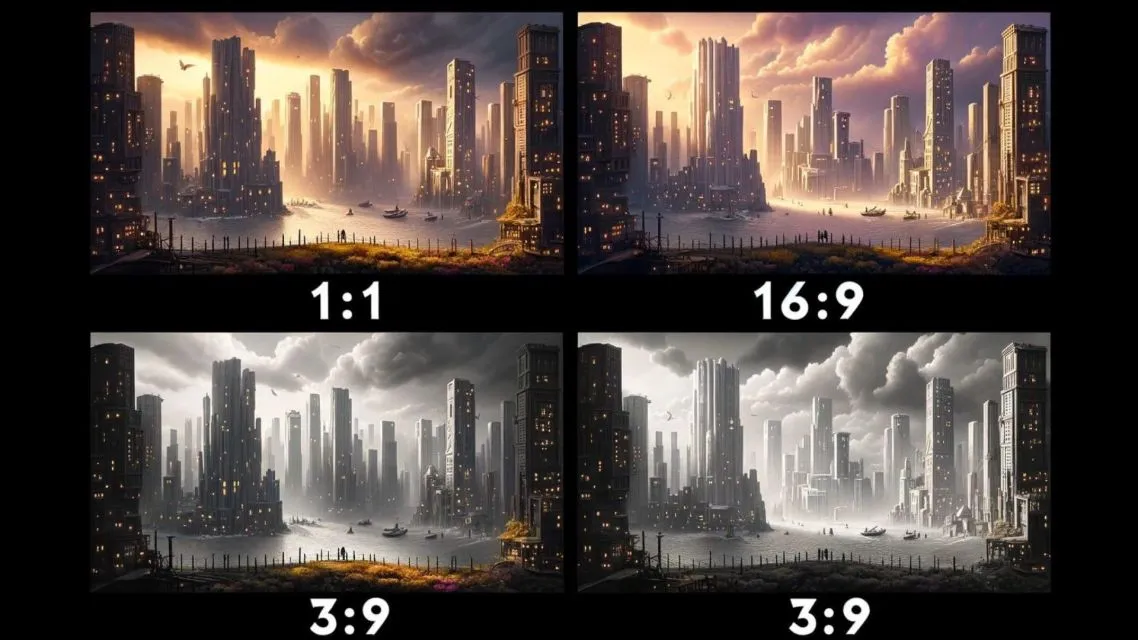
Grid of AI-generated images in multiple aspect ratios-canva via canva.com
Standard AI benchmarks like FID (Fréchet Inception Distance) often fail to capture the practical utility of a model for an indie creator. A model might score well on a benchmark but struggle with the specific “non-standard” requirements of modern social media or web design
Evaluating a model’s reliability should involve stress-testing it with non-standard aspect ratios. While most models are comfortable at 1:1 or 16:9, a professional workflow often demands 21:9 for cinematic banners or 9:16 for vertical video. The “Pro” distinction often reveals itself in how the model handles these edges; does it stretch the subjects, or does it intelligently recompose the scene?
Furthermore, human-led benchmarking remains essential. An operator should run a “batch test” of the same ten complex prompts across different models to see which one maintains the highest level of detail across the entire set. Kimg AI’s interface facilitates this by allowing creators to compare outputs, which is a necessary feature for reducing the cognitive load of asset selection. It is important to remember that a model’s performance on a single “lucky” generation is irrelevant; what matters is the statistical likelihood of success across a hundred generations
The Boundaries of Predictability and the Unknowns of Scaling
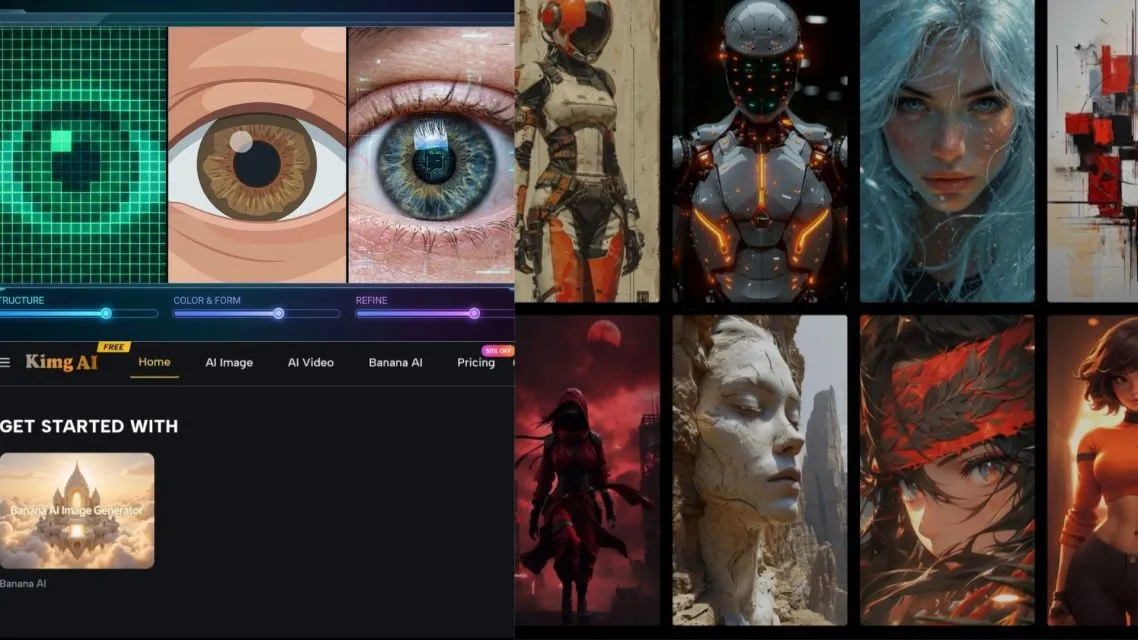
visual style drift, AI image-kimg.ai via kimg.ai
Despite the advancements in models like Nano Banana Pro, it is critical to acknowledge the inherent limitations of generative technology. There is a persistent level of uncertainty that creators must manage.
One such limitation is “style drift.” Even when using the same model and the same seed, long-tail prompts (those that are highly specific and wordy) can produce inconsistent results over time. This is often due to the “black box” nature of model updates and backend optimizations. A workflow that works perfectly today might require recalibration next month. Creators should build “flexible pipelines” that do not rely on a single magic prompt but rather on a deeper understanding of how a specific model interprets different tokens.
There is also the unresolved issue of visual parity across different platforms. An image generated and upscaled on one system may lose its perceived quality or change in color profile when viewed on different devices or compressed by social media algorithms. No “Pro” model can currently guarantee that an asset will look identical on every screen.
Finally, while tools like Nano Banana Pro AI offer significant improvements in text rendering and spatial logic, they are not infallible. There will still be moments of “AI hallucination” where the model introduces elements that were not requested. The goal of a pro-level evaluation isn’t to find a perfect tool—because such a tool does not yet exist—but to find a tool that fails less often and in more predictable ways. By acknowledging these boundaries, indie creators can set realistic expectations for their production timelines and avoid the frustration of chasing a level of consistency that the technology is not yet capable of delivering.
Penulis
Penikmat puisi dan penggemar bakwan kawi yang rasanya cuma kanji.
Editor
Penikmat puisi dan penggemar bakwan kawi yang rasanya cuma kanji.
Artikel Bermanfaat dan Menghibur Lainnya

Tim Dalam Artikel Ini


