


Why modern marketing teams rely on rapid asset generation, AI-powered workflows, and real-time creative iteration to stay competitive.


The traditional creative production cycle is reaching a breaking point. For performance marketers, the gap between a data signal and a creative response has become the primary bottleneck to scaling spend. If a winning ad angle starts to fatigue on a Tuesday, waiting until Friday for a designer to deliver three variations for a multivariate test isn’t just an operational delay—it’s a direct hit to the bottom line. In high-spend environments, the cost of media is often less expensive than the cost of the time lost between iterations.
We are moving away from an era defined by manual craftsmanship toward an era of high-velocity curation. In this new framework, the creative operator doesn’t start with a blank canvas; they start with a set of parameters and use generative models to synthesize, restyle, and pivot assets in real-time. This shift is not about replacing the designer but about removing the technical friction that prevents a creative strategy from keeping pace with the algorithm.
The Performance Bottleneck: Why Production Velocity Lag Kills ROI
In the current landscape of digital auctions, creative is the last remaining lever for significant performance gains. As platform algorithms take over targeting and bidding, the “who” and “how much” are largely automated. This leaves the “what”—the visual and the hook—as the primary variable. However, most creative teams are still organized around a 48-to-72-hour turnaround time for even the simplest asset tweaks.
When a team is running high-frequency multivariate testing, they need to identify winning patterns within hours, not weeks. If the data shows that a specific product lifestyle shot is outperforming a studio shot, the ability to immediately generate forty variations of that lifestyle shot in different lighting, environments, and orientations is the difference between a 2x and a 5x return. Velocity is no longer a luxury; it is the primary competitive advantage. If your production cycle is slower than your data feedback loop, you are essentially flying blind, spending money on assets that the market has already rejected.
From Prompt to Pivot: How Nano Banana AI Compresses the Static Cycle

AI creative models nano banana by makeshot.ai via makeshot.ai
The first stage of modernizing creative operations involves collapsing the distance between a concept and a usable static asset. Traditional workflows often involve searching for stock imagery, negotiating with photographers, or waiting for a 3D artist to render a scene. Tools like Nano Banana AI shift this focus toward image-to-image restyling and rapid refinement.
The real power for a performance marketer isn’t just in generating an image from scratch; it’s in the ability to take a base concept that is already working and “restyle” it to combat creative fatigue. For example, if a “Y2K aesthetic” is currently trending in your niche, you can use existing product assets as a reference and apply that specific visual language across an entire ad set within minutes.
One critical feature in this workflow is the improvement of in-image text. Historically, AI-generated visuals struggled with legibility, forcing designers back into Photoshop for tedious layout work. By utilizing models that prioritize text coherence and refining visuals within a single interface, teams can move from a rough ideation to a “launch-ready” asset without the constant tool-switching that usually kills momentum. However, an important moment of limitation exists here: while text rendering has improved significantly, it is still not 100% reliable for long-form copy or complex brand-specific fonts. There is still a “last-mile” requirement for human oversight to ensure that a typo doesn’t make it into a six-figure ad campaign.
Synthesizing Motion: Transitioning Statics to the AI Video Generator
The second bottleneck in creative operations is motion. Video typically has a much higher production overhead than static imagery due to rendering times, keyframe editing, and the sheer volume of assets required for social platforms. In a traditional setup, motion graphics are the “expensive” part of the budget, often reserved for high-level brand campaigns rather than day-to-day performance testing.
The introduction of an AI Video Generator into the workflow allows teams to treat motion as a commodity rather than a specialty. The most effective strategy we’ve seen is “motion-testing” winning static concepts. When a static image created in the early stage of the funnel shows a high click-through rate, that specific visual should immediately be pushed through a video synthesis model to create narrative hooks.
By using static images as the “seed” for video generation, marketers ensure visual consistency while adding the dynamic elements—like a smooth camera follow or a subtle environmental shift—that capture attention in a scrolling feed. This allows a performance team to test five different video hooks for the price (and time) of one traditional edit. The goal here isn’t to create a cinematic masterpiece, but to find the 0.5-second movement that stops the scroll.
The Review Cycle Evolution: Real-Time Parameter Adjustment
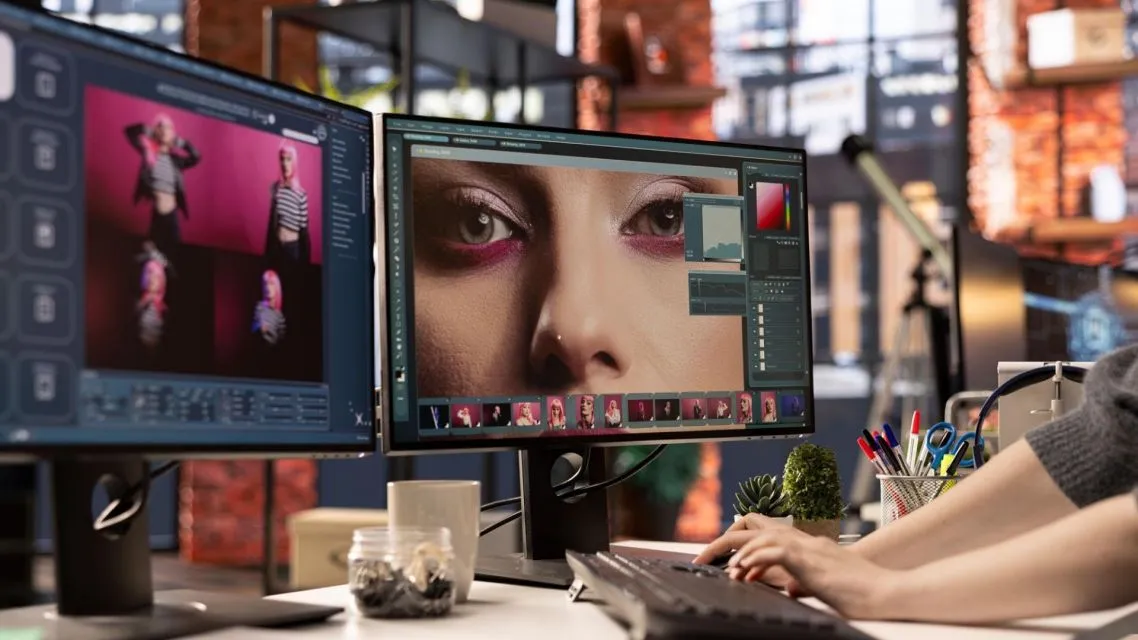
Grapic designer using AI chatbot- canva via canva.com
The traditional “round of revisions” is the death of velocity. Usually, a stakeholder gives feedback, the designer goes away for a day, makes the change, and returns for another review. In a high-velocity operation, the role of the designer shifts to that of a creative director or curator.
Instead of moving pixels, the operator adjusts parameters. If a stakeholder wants a “warmer tone” or a “more professional background,” these changes are handled through “Restyle” and “Refine” functions in real-time. This changes the nature of a creative meeting from a critique of a finished product to a collaborative, live curation session.
This systems-minded approach allows a small team—sometimes even a single growth marketer—to manage a high-output pipeline that would have previously required a five-person creative department. By focusing on the “Prompt to Pivot” workflow, the overhead of managing humans is replaced by the efficiency of managing models. You are no longer managing a queue; you are managing a capability.
The Limits of Synthesis: What High-Velocity Tools Cannot Solve
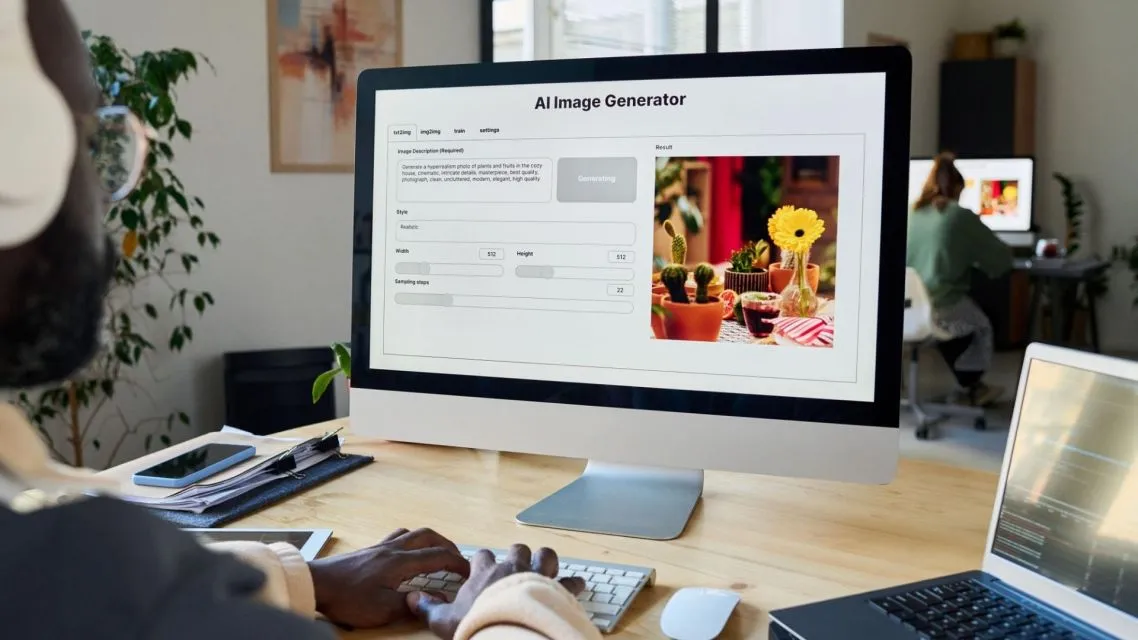
Designer testing new product-canva via canva.com
Despite the efficiency gains, it is vital to maintain a degree of skepticism regarding what these tools can actually accomplish. There is an inherent uncertainty in brand-specific physics that many operators overlook. For instance, AI often struggles to maintain the exact dimensions of a physical product or the nuanced technical specifications of a niche piece of hardware. If you are selling a high-precision medical device or a specifically engineered piece of sporting equipment, generative models might hallucinate details that are technically incorrect, potentially leading to compliance or brand-integrity issues.
Furthermore, we must address the fallacy of volume. Generating 1,000 assets per hour does not guarantee a 1% lift in performance if the underlying creative strategy is flawed. A high-velocity tool like Banana AI can amplify a good idea, but it can also accelerate the distribution of a bad one. What cannot be concluded from the data alone is the “why” behind a creative’s success; the tools provide the data points necessary to find the winner, but they do not replace the human intuition required to interpret those winners and build a long-term brand narrative.
Orchestration as the Final Frontier for Creative Operations
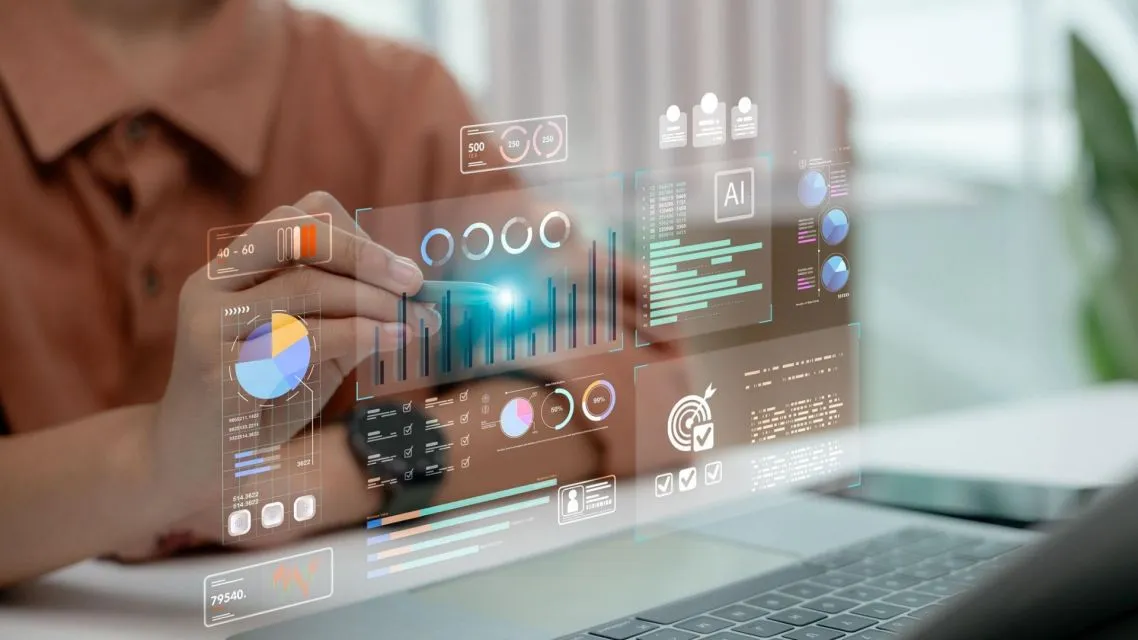
Business analyst using futuristic AI-canva via canva.com
The value of a creative operator is no longer measured by their manual speed in software like After Effects or Illustrator. Instead, value is now defined by the ability to orchestrate a suite of tools to meet the demands of the algorithm. This involves a fundamental shift in mindset: moving from being a maker to being an orchestrator.
A future-proofed creative pipeline integrates these tools into its standard operating procedure (SOP). This means setting up automated workflows where static winners are automatically queued for video synthesis, and where performance data triggers the generation of new variations without human intervention. The platform—whether using Nano Banana AI for its image-to-image restyling or the AI Video Generator for its rapid motion output—becomes an extension of the marketing team’s analytical brain.
In the end, the winners in the next phase of performance marketing will be those who can curate at the speed of the auction. The goal isn’t just to make content faster; it’s to reduce the “time-to-insight” by saturating the testing environment with high-quality, relevant variations. As the cost of creation trends toward zero, the value of the strategist who knows which buttons to push and which assets to greenlight will only continue to rise.
Penulis
Penikmat puisi dan penggemar bakwan kawi yang rasanya cuma kanji.
Editor
Penikmat puisi dan penggemar bakwan kawi yang rasanya cuma kanji.
Artikel Bermanfaat dan Menghibur Lainnya


Tim Dalam Artikel Ini


